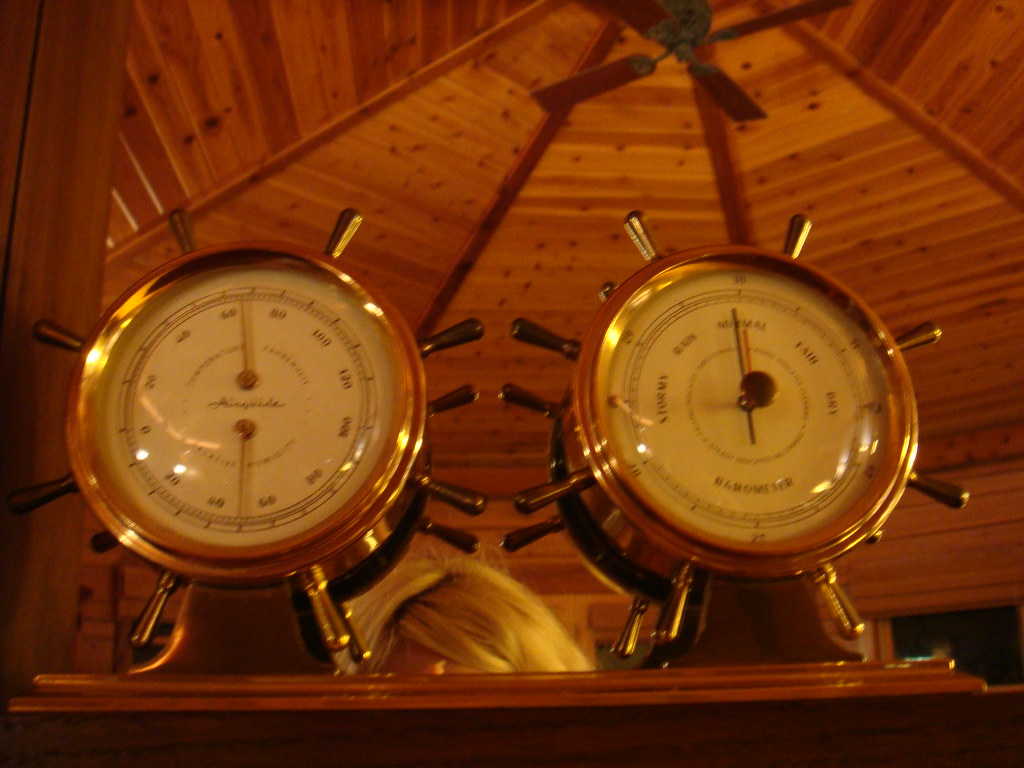
The barometer came in on the morning of November 4, 2025, carried into the Neukölln workshop by a retired engineer named Reinhardt Möser, who had bought it from a dealer in Charlottenburg the previous spring.
It is a stick barometer, mahogany-cased, with a brass cistern cover and a silvered register plate signed J. Ramsden, London. The Ramsden workshop operated from 1763 until Jesse Ramsden's death in 1800, with continued production under his apprentices for another fifteen years.
The cistern was empty. The mercury tube was cracked at a point about six centimetres above the cistern, where the case had likely been knocked against a door frame during a move at some point in the last century. The silvered plate was tarnished but legible.
Mercury, in 2026, is not a casual purchase. The European Union restricts its sale under Regulation (EC) No 1102/2008 and its 2017 amendments. A licensed laboratory supplier in Hamburg will ship triple-distilled mercury for instrument restoration, but only against documentation that the buyer is a registered conservator.
The workshop's licence covers about three kilograms per year. A stick barometer of this size requires roughly four hundred grams. The order was placed on November 12 and arrived on December 3.
The tube was the more difficult problem. Original eighteenth-century barometer tubes were drawn by hand from soda-lime glass with a slight greenish tint. Modern replacements, drawn from borosilicate, are colourless and noticeably different in any side light.
A retired glassblower in Lauscha, Thuringia, named Bernd Steinhoff, still produces hand-drawn soda-lime tubes for the antique-instrument trade. His waiting list is about six months. The Ramsden tube was on it from August.
Steinhoff's tube arrived on December 18. The bore was 4.6 millimetres, within the historical range, and the length, 880 millimetres, matched the original within a millimetre.
Filling a barometer tube is patient work. The mercury must be boiled gently inside the tube to drive off dissolved air and water vapour. Air bubbles ruin the instrument's reading.
The boiling was done over a small spirit lamp on the bench, with the tube held vertically in a clamp. The process took most of an afternoon. Mercury is heavy, and the tube must be moved slowly to avoid breaking.
Once filled, the tube was inverted into the brass cistern, which had been refurbished with a new leather diaphragm cut from a piece of vegetable-tanned calfskin. The diaphragm allows atmospheric pressure to act on the mercury reservoir, which is the entire principle of the instrument.
The original leather was still in place but had hardened and cracked. Replacing it required removing the cistern cover, which was held by four screws that had not been turned since perhaps 1850.
Two of the four screws snapped. Their stubs were drilled out with a 1.2 mm bit and replaced with hand-cut steel screws of the period thread, which is not standard Whitworth and required a tap-and-die set kept in the workshop's third drawer.
The silvered register plate was the most delicate operation. The original silvering was thin, and a careless cleaning would have removed it entirely.
The plate was cleaned with a paste of precipitated calcium carbonate mixed with distilled water, applied with a cotton swab in small circular motions, then rinsed and dried with lens tissue. The engraving, which had been almost invisible under the tarnish, came back to a clean grey-white.
The mahogany case required less work than expected. The original french polish was intact under a century of grime, which yielded to a cotton pad dampened with white spirit and a small amount of beeswax.
The case has a small repair to the lower turning, where someone in perhaps the 1920s replaced a broken bottom moulding with a piece of stained pine. The repair is competent but visible. It was left in place.
Calibrating the barometer against a known reference is the final test. The workshop's reference is a digital aneroid kept in a wall cabinet, itself calibrated against the Deutscher Wetterdienst station in Tempelhof.
On the morning of January 14, 2026, with the Tempelhof station reading 1017 hPa, the Ramsden barometer read 29.97 inches, which is 1014.9 hPa. The two-point-one hectopascal discrepancy is within the tolerance of an instrument of this age and not worth attempting to correct.
Reinhardt Möser collected the barometer on January 28. He has hung it in the entrance hall of his flat in Friedrichshain, on a north-facing wall that does not see direct sunlight, which is the correct position for a mercury instrument.
He sent a photograph two weeks later, showing the barometer beside a coat rack and an umbrella stand. The mercury column was at 29.85 inches. Berlin was expecting weather, and the Ramsden, two hundred and twenty years old, had said so first.