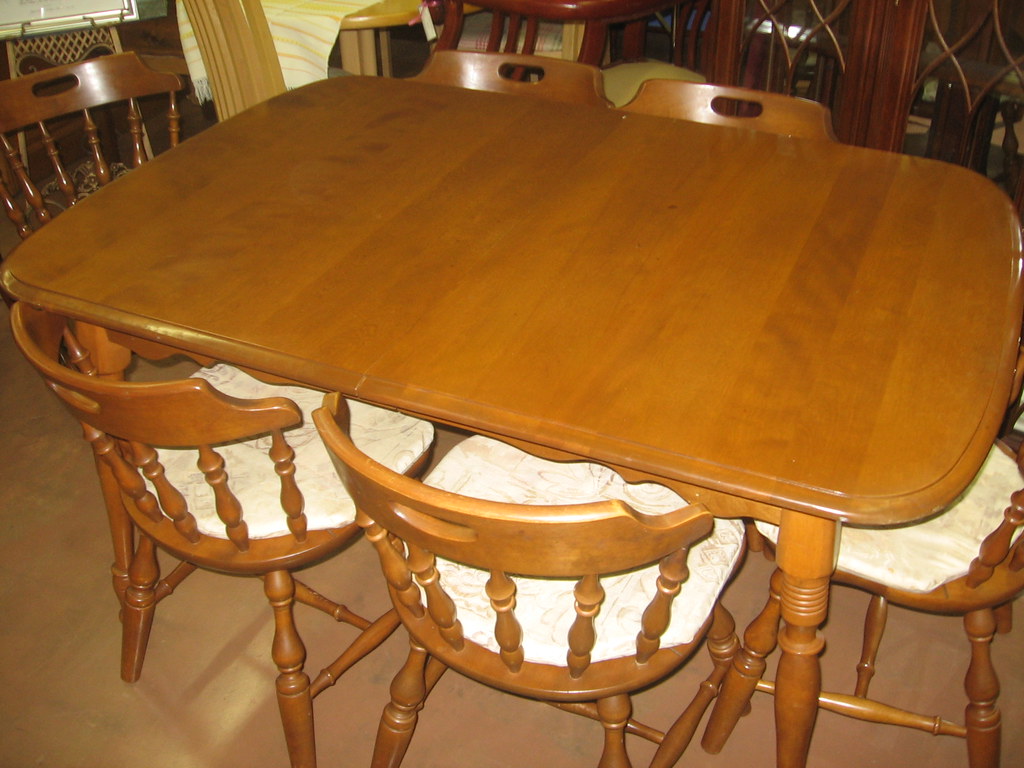
The table is nine feet long, English oak, and the cabinetmaker's records identify it as having left a workshop in Otley, West Riding of Yorkshire, in March 1830. It has lived in eight houses since then and has never been refinished. Its current keeper, a retired river-pilot named Donal McNeice, bought it at an estate sale outside Whitby in 2011 and has been keeping it under wax ever since.
McNeice waxes the table four times a year. The schedule is not arbitrary. It corresponds to the changes in indoor humidity in a stone farmhouse on the North York Moors, which swings from around 38 percent in February to about 68 percent in July. Oak responds to humidity. Wax helps to mediate the response.
The first wax of the year goes on in mid-February, when the central heating has been running for three months and the table is at its driest. McNeice uses a paste wax — a blend of beeswax and carnauba in a turpentine carrier — that he buys from Liberon, the French maker, in a 500 ml tin. The same tin lasts him eighteen months.
He applies the wax with a folded cotton cloth, working in small circles along the grain in roughly two-foot sections. The cloth picks up only a faint smear at a time. Overapplication is the most common amateur mistake. Wax should not be visible on the surface; it should be felt, not seen.
After fifteen minutes of dwell time, he buffs with a clean horsehair brush of the kind used for polishing shoes. The horsehair raises a soft sheen without leaving the streak-marks that a cotton cloth can produce. A final pass with a clean, dry linen cloth removes any last brush marks.
The whole operation, for nine feet of table, takes about ninety minutes. McNeice does it on a Sunday morning with the radio on.
The second wax goes on at the end of April. Spring humidity is rising, and the wax laid down in February has been worn through in the most-used areas, particularly the south end where breakfast is taken. The April application is lighter than the February one — perhaps two-thirds the quantity — and concentrates on the high-wear zones.
The third wax is the most contentious among furniture conservators, and McNeice is on the minority side of the argument. He waxes again in mid-July, at peak summer humidity. The orthodox conservator's position is that summer waxing is unnecessary and risks softening the surface. McNeice's counter-position, developed over fifteen years on this particular table, is that the summer wax helps to slow the absorption of atmospheric moisture into the end grain, where the table is most vulnerable to seasonal movement.
The end grain at the breadboard ends of the refectory top has, over the past fifteen years, moved less than 1.5 mm with the seasons. The center of the top moves about 3 mm. Both figures are at the low end of what is normally seen in oak of this age and width.
The fourth and final wax of the year goes on in late October, before the central heating comes on. This is the most thorough application of the year. The whole table — top, apron, legs, stretchers — is cleaned first with a barely damp cloth, then dried, then waxed in the careful two-foot sections, then buffed.
October is also when McNeice waxes the underside of the top. Most owners never wax the underside of a table. They should. The underside loses and gains moisture at a different rate from the polished top, and the differential swelling can drive cupping. A thin layer of wax on the underside, applied once a year, evens the rate of exchange.
He uses the same wax on the underside as on the top, but unbuffed. There is no aesthetic reason to buff a surface no one sees.
What does the wax do, exactly, that justifies this schedule. Three things, all of them modest. First, it slows the rate of moisture exchange between the wood and the air, which reduces the magnitude of seasonal movement and therefore the risk of checking and splitting. Second, it provides a sacrificial layer that takes the wear of plates, glasses, dragged objects, and elbow-rest, so that the original surface of the wood beneath is not abraded. Third, it produces a soft, low sheen that is, in the judgment of most people who care about old oak, the right look for the material.
What the wax does not do is provide a moisture barrier in the way that a film finish — polyurethane, lacquer, French polish — would. A glass of cold water left on a waxed oak table will leave a white ring within twenty minutes. This is a feature, not a bug. A film finish on an 1830 oak table would be wrong on aesthetic grounds and worse on conservation grounds, because it would prevent the wood from breathing and would, when it eventually failed, take a layer of the wood with it.
McNeice uses coasters. He also uses placemats, table runners, and trivets for hot dishes. The waxed surface is for living on, but not for testing.
Marks happen anyway. A white ring from a cup of tea left on the table by a visiting niece in August 2023 took six months and one re-waxing to disappear. A scorch mark from a casserole dish in 2019 is still faintly visible if the light is raked across it. McNeice has decided not to try to remove it.
The argument for waxing oak rather than refinishing it is partly aesthetic and partly philosophical. A refinished 1830 table would have a perfect, even surface and would look approximately seventy-five years younger than it is. A waxed 1830 table looks its age, which is to say it looks like an object that has been used by people for almost two hundred years and is still being used.
McNeice's preference is for the second kind of table. Many people, including some good furniture historians, would disagree, and the magazine respects the disagreement. The wax tin, in any case, sits on a shelf in the pantry where it has been since 2011, and the table is set for breakfast at half past seven every morning.
Filed under