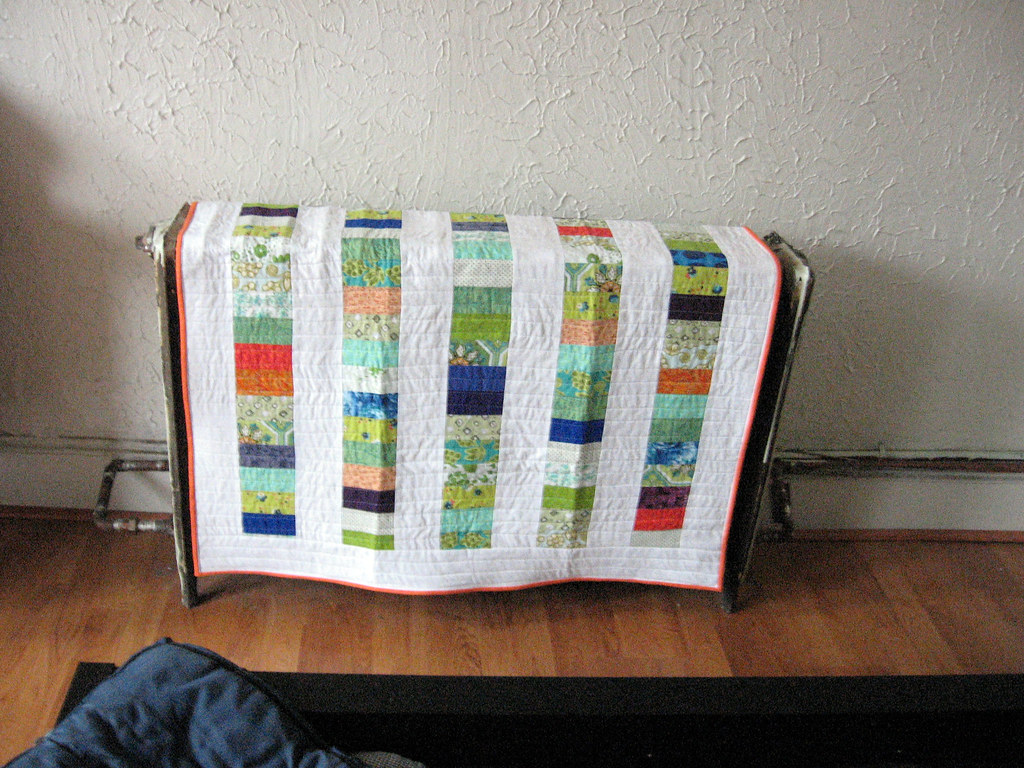
The quilt sits on a low table in a workroom in Hudson, New York, folded twice so that one appliquéd corner shows. The corner is a red tulip stitched onto a field of cream-coloured cotton sateen that has gone the colour of weak tea. A pencilled inventory tag, no larger than a business card, is pinned to the binding. It reads, in the handwriting of a Lancaster County auctioneer named Earl Yoder, Lot 142, quilt, appl., $40, M. Brubaker, 11-4-78.
Yoder is dead now. The buyer, a Hartford schoolteacher named Mildred Brubaker, died in 2019, and her granddaughter brought the quilt to The Pewter last December with a plain question. Where did it come from before the auction, and could it be traced.
The short answer is yes. The long answer takes ten months, three county courthouses, a Mennonite genealogy society in Lancaster, and a small fire-insurance map from 1908 to reach.
The first useful clue is the tulip itself. Pennsylvania-German appliquéd quilts of the third quarter of the nineteenth century follow regional templates, and the tulip on this quilt — four petals, slightly asymmetrical, with a small green calyx stitched in chain stitch rather than buttonhole — matches a pattern recorded by the textile historian Patricia T. Herr in her 1990 survey of Lancaster County appliqué. Herr called the pattern Warwick tulip after the township where she first saw it. The pattern is regional and dated; it appears almost exclusively on quilts made between 1855 and 1880 in a band of farms north of Lititz.
That gave Hudson a county. The Yoder inventory gave a year.
Hudson sat with the quilt for two weeks and looked at the back. The backing fabric is a printed cotton calico, dark brown with a small white pinwheel motif, that the textile historian Florence Peto would have called a shirting print. Peto's notes, archived at the Henry Francis du Pont Winterthur Museum, place this particular pinwheel print in a Philadelphia mill catalogue dated 1869. The quilt was almost certainly made between 1869 and 1875.
The binding is hand-stitched in a slightly later thread, a mercerised cotton not commercially available before 1890, which suggested a re-binding. The original binding had worn out and been replaced once, probably by the maker's daughter, possibly thirty years after the quilt was first finished.
None of this names a maker. The next step was the auctioneer's records.
Earl Yoder's daughter, Ruthann, still lives in Manheim Township and keeps her father's ledgers in a footlocker in a spare bedroom. She agreed to look. The ledger for the autumn of 1978 lists Lot 142 as part of an estate sale held on November 4 at a farm on Newport Road, four miles north of Lititz. The estate was that of Elsie Hoffer Rissler, who had died at ninety-one on August 19 of that year.
Elsie Hoffer Rissler was born in 1887 in a farmhouse on the same property where she died, the daughter of Aaron Hoffer and Anna Brubaker Hoffer. The Brubaker name on Yoder's tag — the buyer — was a coincidence; Mildred Brubaker of Hartford was no relation, only a tourist who had stopped at the sale on a long weekend.
The Hoffer farm is documented in the 1908 Sanborn fire-insurance map of Warwick Township as a 142-acre property with a stone bank barn and a brick farmhouse. The farmhouse, the map indicates, had a kitchen wing added between 1880 and 1908.
The Lancaster Mennonite Historical Society holds the Hoffer family Bible, donated in 1991 by a great-niece. Hudson drove down on a Thursday in April and read it at a table in the reading room. The Bible records four daughters born to Aaron and Anna Hoffer between 1869 and 1881. The eldest, Mary Ann Hoffer, born September 11, 1869, died at sixteen of typhoid in the summer of 1885. The Bible's flyleaf, in a careful copperplate, records that Mary Ann's quilt was finished by mother on the day of the burial.
A quilt finished on a burial day, in a household of the period, is almost always a bride's quilt that the daughter did not live to use. The convention was for the mother to complete the work as a memorial. The Warwick tulip pattern was a courting pattern; quilts in this template were typically begun by a daughter and finished by her mother when the daughter became engaged.
Mary Ann Hoffer would have been sixteen at the time of her death — old enough, in the 1880s, to have begun courting and to have been working on her own quilt for several years. Anna Hoffer, her mother, would have finished it in the September of 1885 in a kitchen that the Sanborn map shows had not yet been expanded.
From 1885 to 1978 the quilt stayed in the family. Mary Ann's sister Elsie inherited it at her mother's death in 1924 and kept it folded in a blanket chest. Elsie never married. When she died in 1978 the chest was sold with the rest of the contents of the farmhouse, and Mildred Brubaker, who had stopped at the sale because she liked the look of the barn, paid forty dollars for the quilt because the tulips reminded her of a curtain her own mother had once owned.
Mildred kept it on a guest bed in Hartford for forty-one years. When she died, her granddaughter found it folded inside a pillowcase in a hall cupboard, with Yoder's pencilled tag still pinned to the binding.
The granddaughter does not plan to sell. She has asked Hudson to recommend a conservator, and a quilt of this period and provenance will be cleaned, not laundered, by a textile specialist named Linnea Vogel in Stockbridge, Massachusetts, who has agreed to take the work in July. Vogel will photograph the quilt on a light table to record the placement of the appliqué before cleaning, and she will record the thread counts and dye samples for the Winterthur archive.
The granddaughter wrote a short note to The Pewter after the research was complete. She said that she had not known any of this when she inherited the quilt, and that she had been about to take it to a thrift store. She said she would now keep it on a frame in her hallway, with a small typed card naming Mary Ann Hoffer of Warwick Township, Lancaster County, born September 11, 1869.
The card is on the quilt now. The forty-dollar lot has not changed in any visible way. It is still folded, still cream-coloured, still bound in mercerised cotton. The tulip on the corner is still the Warwick pattern. What has changed is small and bureaucratic: a name attached, a date confirmed, a path drawn from one kitchen to another over a hundred and forty-one years.