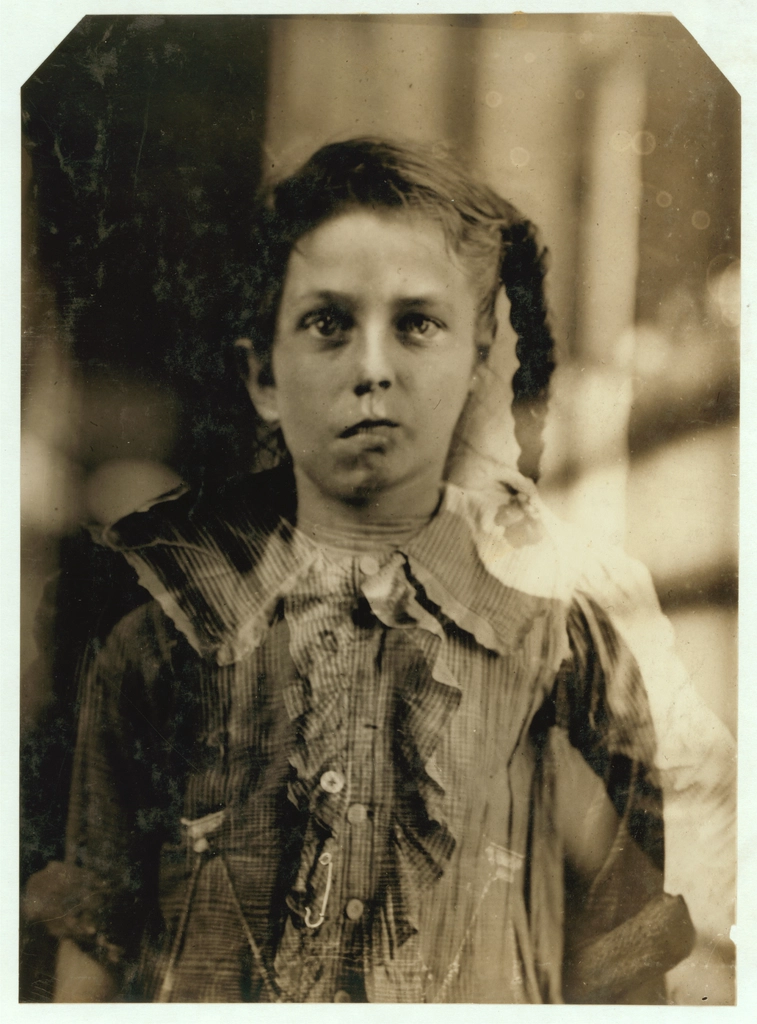
Estelle Crane lives in a single-story brick house on the outskirts of Fayetteville, Arkansas, about three miles from the western edge of the city. The house has three bedrooms. Two of them are now full of photographs.
The collection numbers 11,200 anonymous American snapshots, almost all dating between 1910 and 1955, almost all from rural locations. Crane does not collect studio portraits, postcards, or professional photography.
She is interested in what she calls the back-porch frame — the snapshot taken at home, by a family member, on a Kodak Brownie or a similar amateur camera, never intended to leave the household.
Crane began collecting in 2000, the year she retired from thirty-six years of teaching American history in the Fayetteville public schools. She was sixty-two then. She is now eighty-eight, and the collection continues to grow at the rate of about two hundred photographs a year.
Her first acquisition was a single shoebox of about seventy snapshots bought for three dollars at an estate sale in Springdale. The snapshots were from a farm family near Rogers, Arkansas, in the late 1930s.
She has kept that shoebox separate. It sits on the top shelf of the smaller bedroom closet, in its original cardboard, with a single index card identifying it as the founding box.
The rest of the collection is housed in 184 archival boxes from the supplier Gaylord Archival, each box holding about sixty photographs in acid-free polyethylene sleeves. The boxes are labeled by state and decade.
Arkansas is the strongest run. Crane has 2,847 snapshots from Arkansas farms, towns, and homesteads. The second-strongest run is Oklahoma, with 1,612 snapshots, followed by Texas with 1,308.
She has photographs from every state east of the Rockies except Rhode Island and Delaware. She has been hunting Rhode Island for nineteen years and has not yet found a rural Rhode Island farm snapshot she trusts.
Her method of acquisition is patient. She buys from three rural-Arkansas auctioneers who alert her when a deceased estate contains photo albums or boxes of loose pictures. She buys from a dealer in Memphis who specializes in vernacular photography.
She also goes, twice a year, to a large flea market in Canton, Texas, where she has bought boxes of unsorted snapshots for as little as twenty-five cents each since 2003.
I am not buying photographs, she said. I am rescuing them from the trash. The estate sales would throw the boxes away if I did not come.
Crane catalogues each photograph by hand. She does not write on the photograph or its sleeve. She writes on a separate three-by-five index card filed in a long oak card cabinet in the hallway.
Each card records the state, the apparent decade, any identifying features Crane has observed — a building style, a vehicle make, a particular crop — and a brief description of the subject. The cards do not name the people, because the people are almost never named.
There are now 11,200 cards, in twenty-four drawers, alphabetized by state and ordered within state by decade. Crane has trained herself to write the cards in about ninety seconds each.
She has, over twenty-six years, identified the family in only three photographs. Each identification came from a chance encounter — a visitor to her house who recognized a face, or a researcher who matched a photograph to a known family album held by a historical society.
She does not consider identification a goal of the collection. These photographs are anonymous because they have outlived their families, she said. That is part of what they are. I do not want to undo that.
The collection has been used by two academic researchers — a doctoral student at the University of Arkansas writing on rural domestic architecture in the 1920s, and a folklorist at Mississippi State studying farm-women's dress between the wars.
Crane has welcomed both. She lets researchers sit at the dining-room table and work through whatever boxes they need. She does not charge a fee. She does not allow photographs to leave the house.
She has arranged for the entire collection to be given to the Special Collections department at the University of Arkansas Libraries on her death. The arrangement, made in 2019, includes the card cabinet and the founding shoebox.
I am pleased it will stay in Arkansas, Crane said. The photographs were taken on this kind of land. They should rest on it.
On the day of the visit, she was working through a box of about ninety snapshots she had bought the week before from an estate near Russellville. She was writing the cards in pencil at the dining-room table, with a pot of coffee at her elbow, working slowly.