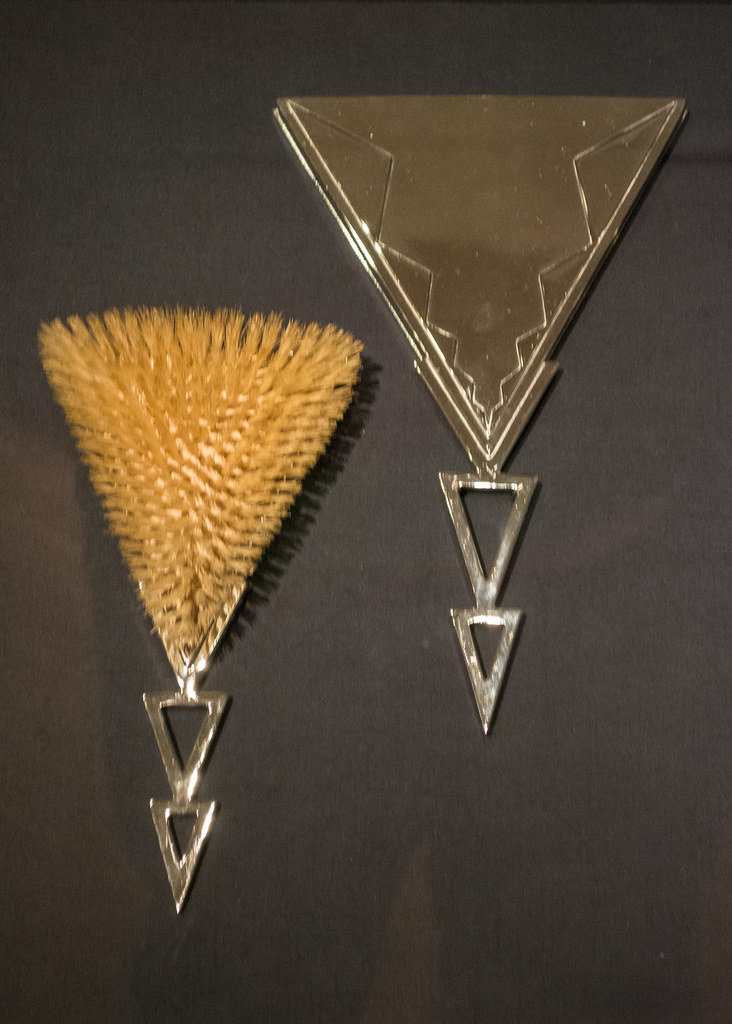
Mira Cottle keeps three brass brushes on her bench in Sheffield, all of them older than her daughter. The eldest, a stub of a thing with most of its bristles worn down to half their original length, belonged to her teacher and his teacher before him. It has cleaned, by her estimate, somewhere north of two thousand pieces of silver and pewter in its long working life.
She uses it once or twice a day. The other two she keeps in reserve.
The brass wire brush is, in the restoration trade, one of the most misunderstood tools on the bench. Untrained hands reach for steel wool or, worse, a household scouring pad. The damage these inflict on soft metals is irreversible and often invisible until the light catches it from the wrong angle.
Brass, being softer than silver and very much softer than steel, will not scratch the metals it touches. It will, when worked across a tarnished surface, lift the loose particulate without polishing through the patina. This is the distinction the trade cares about. A polished antique reads, to a knowing eye, as a damaged one.
Cottle's teacher, the Sheffield silver assayer Edmund Bramwell, taught her to think of the brush as a tool of consent. It removes what the metal has agreed to release. It will not take anything held more tightly.
There is a small ritual to using one well. The brush is dipped, briefly, in lukewarm water with a drop of liquid soap. It is then drawn across the metal in the direction of the existing finish, never circular, never against the grain of any prior polishing. On hollowware the strokes follow the curve. On chased work the brush goes with the chase, not across it.
The bristles, after some weeks of use, soften further. This is what makes an old brush more valuable than a new one. New brass bristles are slightly stiff and slightly bright. They can mark unintentionally on a very soft surface, particularly pewter older than 1780. An old brush has been worn into a condition the trade calls broken-in, which is what other tradesmen call useless.
The brushes themselves come from a small number of European makers. The German firm of Lessmann has been producing them since 1949. The Italian house of Osborn, larger and more diversified, makes a brass brush sold under several private labels. Both are sound. The English brush trade, once concentrated in Walsall, is now reduced to a handful of small makers, of whom Cottle prefers Buffin's of Birmingham, who still hand-bind their smaller brushes with copper wire.
A good brush, properly used and kept dry between sessions, will last fifteen to twenty years. Cottle's teacher's brush, the eldest of her three, is approaching its sixtieth year. The wooden handle has been replaced twice. The bristles are original.
What the brush will not do is as important as what it will. It will not remove deep tarnish, which is a chemical problem requiring a chemical solution and a different conversation. It will not bring up a high polish, which is the work of a rouge cloth and considerable patience. It will not address corrosion, which is damage of a different category.
What it will do, and what almost nothing else will do as well, is remove the soft surface dirt that builds up on a piece between cleanings, without lifting the patina that gives an antique its visual depth.
Cottle uses the brush on a tankard or a salt cellar perhaps once a month, between the more thorough conservator's wash she gives the same pieces twice a year. She uses it on a single client's tea service every fortnight, because that client uses the service and Cottle is paid to keep it in working condition.
On pewter she uses a slightly different brush, the same material but with shorter, denser bristles. Pewter is softer still than silver, and the working pressure has to be lighter. She owns one such brush, bought from a now-closed pewterer's supply house in Stoke-on-Trent in 1998, and she does not know where she will replace it when the bristles finally give out.
The brush is not, by itself, a complete cleaning system. Cottle's bench also holds soft cotton flannel cloths, several grades of jeweller's rouge, a chamois, and a small box of pith balls for the most delicate work on raised decoration. The brush is the first tool she reaches for and often the only one she needs.
For the household keeper of inherited silver, the brass wire brush is the most useful single purchase available for under five pounds. A small handle-brush from any of the European makers, used with mild soapy water and an unhurried hand, will keep a tea service or a set of candlesticks in good condition without the slow erosion of the surface that comes from regular use of polish.
The error most often made by amateurs is to treat the brush as a substitute for proper cleaning, when it is in fact the alternative to it. A piece that is brass-brushed every fortnight may not need polishing for a decade. A piece that is polished every month will, in a decade, have lost a noticeable layer of itself.
Cottle was asked once, by a visiting American collector, what she would save if her workshop caught fire. She said the brushes, which made the collector laugh until she realised the answer was serious.
The brass wire brush is unglamorous, cheap, and easily replaced if you can still find a maker. It is also, in the right hands, one of the few tools in the conservator's kit that does its work entirely by removing what should not be there and leaving what should. That, in any trade, is rarer than it sounds.
Filed under